
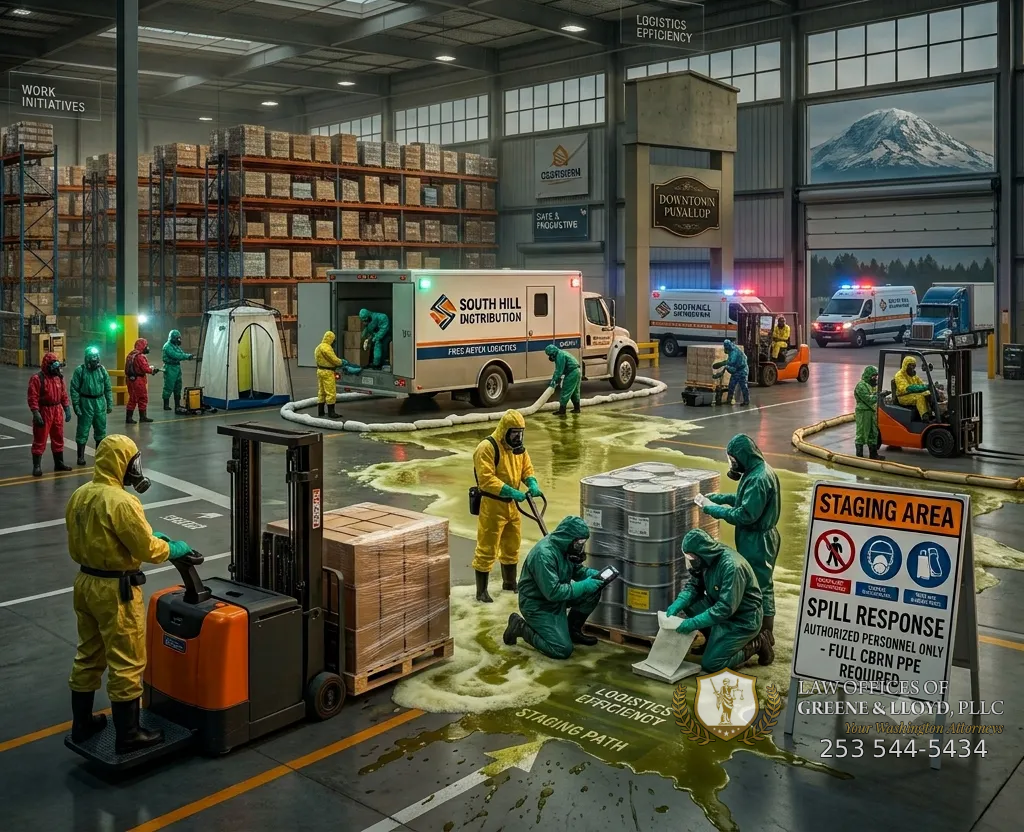
Practice Area — Toxic Exposure
Toxic Exposure Claims
Injured by chemicals, pesticides, contaminated water, or workplace toxins near Puyallup? The filing clock on a toxic exposure claim may run from when you discovered the cause — not from the date of exposure itself. Toxic exposure cases are among the most evidence-intensive in personal injury law. Attorneys Rob Lloyd and Tim Greene identify who is responsible and build the documentation these cases require. Free, confidential, available 24/7.
Serving Puyallup, South Hill & all of Pierce County · Free consultation available 24/7
DiscoveryRule may extend the filing clockWA latent injury rule
RCW 7.72Product liability for toxic substancesWashington Product Liability Act
No feeUnless we recover for youContingency representation
The Deadline QuestionWhen Does the Filing Clock Start on a Toxic Exposure Claim?
This is the most important and most misunderstood aspect of toxic exposure law — and getting it wrong can permanently bar a valid claim.
Washington's discovery rule for latent injuries
Washington's general personal injury deadline is three years (RCW 4.16.080). But for toxic exposure cases where a disease or condition develops long after the exposure — occupational cancers, chronic respiratory disease, neurological conditions — Washington applies a discovery rule: the statute of limitations may run from the date you knew or reasonably should have known about both the injury and its likely cause, rather than from the date of exposure itself. This means a claim may not be time-barred even when the exposure occurred years or decades ago — but determining exactly when the clock started requires a careful legal analysis of the specific facts.
The discovery rule doesn't apply automatically and the exact trigger point is fact-specific. If you've recently been diagnosed with a condition you believe may be linked to a past chemical exposure, speak with an attorney promptly — don't assume the claim is barred without getting a proper assessment.
This page provides general information about Washington law and is not legal advice. Deadline rules for toxic exposure cases are highly fact-specific; contact us to discuss your situation.
Sources of ExposureCommon Toxic Exposure Scenarios in Pierce County
Toxic exposure claims arise from a wide range of sources — what they share is that an identifiable substance caused a documented health injury:
- Workplace chemical exposure — solvents, heavy metals (lead, mercury, cadmium), asbestos, industrial gases, and cleaning agents in manufacturing, automotive, agricultural, and construction settings. Pierce County's mix of agricultural land, light industry, and logistics operations creates real occupational exposure risk.
- Pesticide and herbicide exposure — Puyallup's agricultural history and the surrounding valley's ongoing farming operations mean pesticide exposure claims — both occupational and residential — are a realistic local category.
- Contaminated water — groundwater or municipal supply contaminated with industrial chemicals, PFAS compounds, heavy metals, or agricultural runoff.
- Mold exposure — prolonged exposure to toxic mold in rental housing or commercial spaces where a property owner failed to remediate a known problem.
- Carbon monoxide poisoning — from faulty appliances, attached garages, or inadequate ventilation in a rental property — where the property owner's failure to maintain safe conditions creates liability.
- Consumer product exposure — household chemicals, personal care products, or building materials with toxic components that the manufacturer failed to adequately disclose.
Who Is ResponsibleIdentifying Liable Parties in a Toxic Exposure Case
Toxic exposure claims can run against several different types of defendants, and multiple parties often share responsibility:
Employers — L&I and a civil claim may both apply
Workplace toxic exposure often triggers both an L&I occupational disease claim under Washington's Industrial Insurance Act (Title 51 RCW) and a potential third-party civil claim — for example, against the manufacturer of the chemical or a contractor who introduced the hazard. The two claims are not mutually exclusive; an attorney helps coordinate them.
Product manufacturers — RCW 7.72
When a toxic substance is a commercial product, Washington's Product Liability Act (RCW 7.72) may support a claim against the manufacturer or supplier for failure to warn of known hazards, a design defect, or a manufacturing error. These claims require documented exposure, a causal link to the injury, and often expert toxicological and medical testimony.
Property owners
Landlords and property managers who knew about mold, contamination, or other toxic conditions in rental or commercial property and failed to remediate may be liable to tenants or occupants who suffered injury as a result.
Building the CaseWhat Evidence a Toxic Exposure Claim Requires
Toxic exposure cases are among the most evidence-intensive in personal injury law. The chain from exposure to documented harm requires establishing each link:
- Exposure documentation — the specific substance, the source, the duration, and the level of exposure. Workplace safety data sheets (SDS), air quality monitoring records, water testing results, and employment records can all be relevant.
- Medical documentation — a diagnosis connecting the condition to the substance. Medical records, treating physician opinions, and specialist evaluations form the foundation.
- Expert testimony — industrial hygienists assess exposure levels and workplace conditions; toxicologists establish the causal link between the substance and the medical condition; medical experts explain the diagnosis and prognosis.
- Defendant's knowledge — what the responsible party knew about the hazard and when. Safety data sheets, internal communications, regulatory violations, and prior complaints can establish that knowledge.
We handle toxic exposure claims on a contingency-fee basis — no attorney fee upfront, a fee only if we recover for you. You work directly with Rob Lloyd and Tim Greene throughout.
Common Questions
Toxic Exposure Claim FAQ
How long do I have to file a toxic exposure claim in Washington?
Washington's general personal injury statute of limitations is three years (RCW 4.16.080). For toxic exposure cases where a disease develops long after the exposure, Washington applies a discovery rule — the clock may run from when you knew or reasonably should have known about the injury and its likely cause, rather than the date of exposure. This is one of the most fact-specific deadline questions in personal injury law; confirm with an attorney as soon as a possible exposure link is identified.
Who can be held liable for toxic exposure injuries?
Depending on the source and circumstances, liability can fall on an employer (alongside or beyond L&I), a manufacturer or supplier of a toxic product under Washington's Product Liability Act (RCW 7.72), a property owner whose land or premises contains contamination, or a business that discharged contaminants into shared air or water. Multiple parties often share responsibility.
What types of toxic exposure lead to injury claims?
Common categories include workplace chemical exposure, pesticide and herbicide exposure, contaminated drinking water, mold exposure in rental or commercial property, carbon monoxide poisoning, and consumer product chemical exposure. The unifying requirement is that an identifiable substance caused a documented health injury.
Can I file a toxic exposure claim if I was exposed at work?
Possibly both an L&I claim and a civil claim. Washington's workers' compensation system covers occupational diseases caused by workplace chemical exposure (Title 51 RCW), but a third-party civil claim may also exist against the manufacturer of the chemical or a contractor who introduced the hazard. The two claims are not mutually exclusive.
What evidence is needed for a toxic exposure claim?
Strong toxic exposure claims document the specific substance and how you were exposed, the duration and level of exposure, medical evidence linking the substance to your diagnosis, and the responsible party's knowledge of the hazard. Industrial hygienists and toxicologists are often engaged as experts to establish the exposure-to-harm chain.
How are toxic exposure attorney fees structured?
On a contingency-fee basis. You pay no upfront attorney fee, and a fee is owed only if we recover compensation for you. Your initial consultation is free.
Talk to a Puyallup Toxic Exposure Attorney
A recent diagnosis may not mean a missed deadline. Let's find out.
Toxic exposure claims are complex, but Washington's discovery rule may give you more time than you think. Greene & Lloyd assesses the timeline, identifies every responsible party, and builds the documentation these cases require. Your case review is free, confidential, and available 24/7.
The Law Offices of Greene & Lloyd, PLLC
4115 S Meridian Ste B, Puyallup, WA 98373(253) 544-5434 · Free consultation 24/7
Serving
Puyallup · South Hill · TacomaAll of Pierce County, Washington
The information on this page is provided for general informational purposes only and does not constitute legal advice, nor does it create an attorney-client relationship. Deadline rules for toxic exposure cases are highly fact-specific and the discovery rule does not apply automatically; confirm applicable deadlines with a licensed Washington attorney. Prior results do not guarantee a similar outcome.
